
How to Remember to Take PrEP Every Day
The easiest way to remember daily PrEP is to stop relying on memory. Pick one time of day, attach it to something you already do every day, and set a reminder that fires at that time whether you're thinking about it or not. Then plan ahead for the two things that break most routines: travel and running out.
The short version: take your pill at the same point in your day, next to a habit you never skip (brushing your teeth, your first coffee). Set a daily phone reminder with discreet wording. Use a weekly pill box so you can see at a glance whether you took today's. Pack extra for trips, and book your refill and follow-up visit before you run low. How and when to take PrEP is between you and your prescriber; ask them or your pharmacist anything clinical.
This guide is about remembering, not about how PrEP works or how to take it. It isn't medical advice. Follow the instructions your prescriber and pharmacist give you.
Why the daily habit matters
The CDC is direct about it: you must take PrEP as prescribed for it to work, and if you don't, there may not be enough medicine in your bloodstream to block the virus. CDC's PrEP pocket guide adds that PrEP is much less effective when it isn't taken as prescribed.
So the goal is a routine that holds up on busy days, late nights and weekends away, not just on good days.
1. Pick one time you can hit every day
Choose a time when you're almost always in the same place and awake: just after you wake up, or just before bed. A time that depends on your schedule ("after work", "at lunch") moves around too much.
If you're not sure whether timing or food matters for your prescription, ask your pharmacist. CDC's medication safety tips note that some medicines should be taken with meals or at a certain time of day, and recommend asking your pharmacist or doctor whenever label instructions aren't clear.
2. Pair it with something you already do
HIV.gov's tips for taking HIV medicine every day are written for HIV treatment, but the advice carries over: add taking your medicine to things you already do each day, for example making it a habit to take it at breakfast.
Some anchors that work for a lot of people:
- Brushing your teeth. Keep the bottle or pill box next to your toothbrush.
- Your first coffee or tea. Put it by the kettle or the coffee maker.
- Plugging in your phone at night. Keep the pill box next to the charger.
- Your morning vitamins or other daily medicines. One routine instead of two.
Pick a spot you see at that moment, every day. Out of sight really is out of mind.
3. Set a daily reminder (and keep it discreet)
CDC's medication safety page suggests setting timers or reminders to help you remember your medicines, and says you might try a reminder app. HIV.gov's tips say the same: set an alarm on your phone or watch for the time you take your medicine.
A plain phone alarm works. A reminder app has two advantages: it fires on its own every day without you resetting anything, and it can be worded so nobody glancing at your phone learns anything.
If privacy matters to you, check what your reminder shows on the lock screen. On iPhone you can go to Settings > Notifications and set Show Previews to When Unlocked or Never, for all apps or just one.
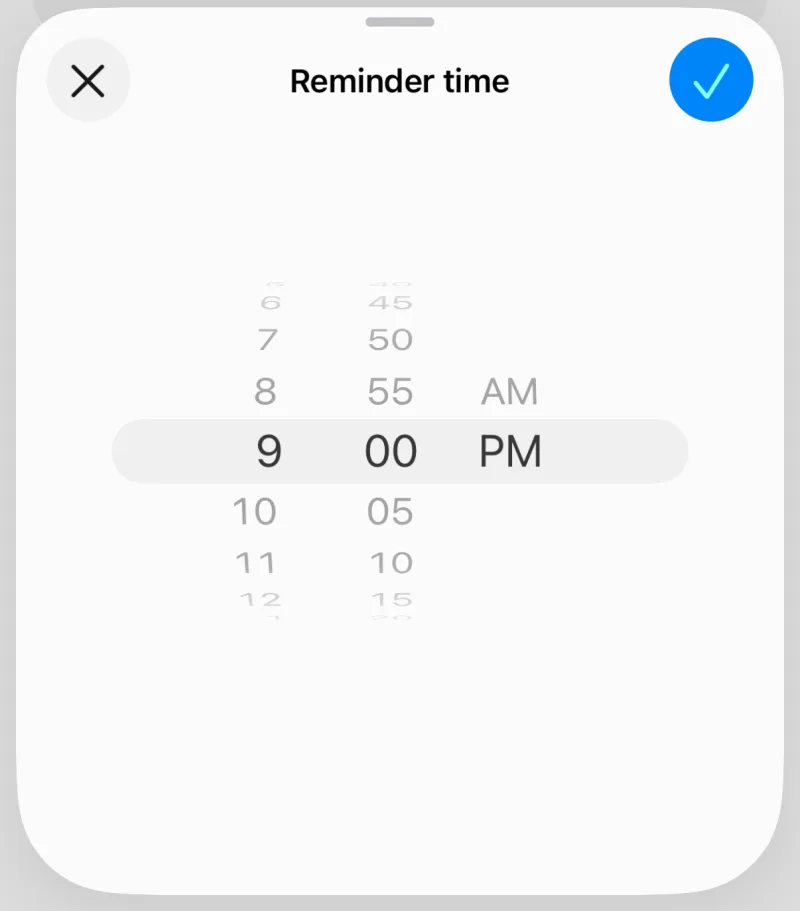
Hook has a free PrEP reminder for daily pills, in Settings under Sexual health. Turn it on, pick a reminder time, and you get one local notification at that time every day. The lock screen only says "Daily reminder" and "Time for your daily dose", with no mention of PrEP or HIV. It's set up and stored on your iPhone, with no account, and nothing leaves your device. The page also links to the CDC's PrEP page and reminds you to follow your clinician's instructions.
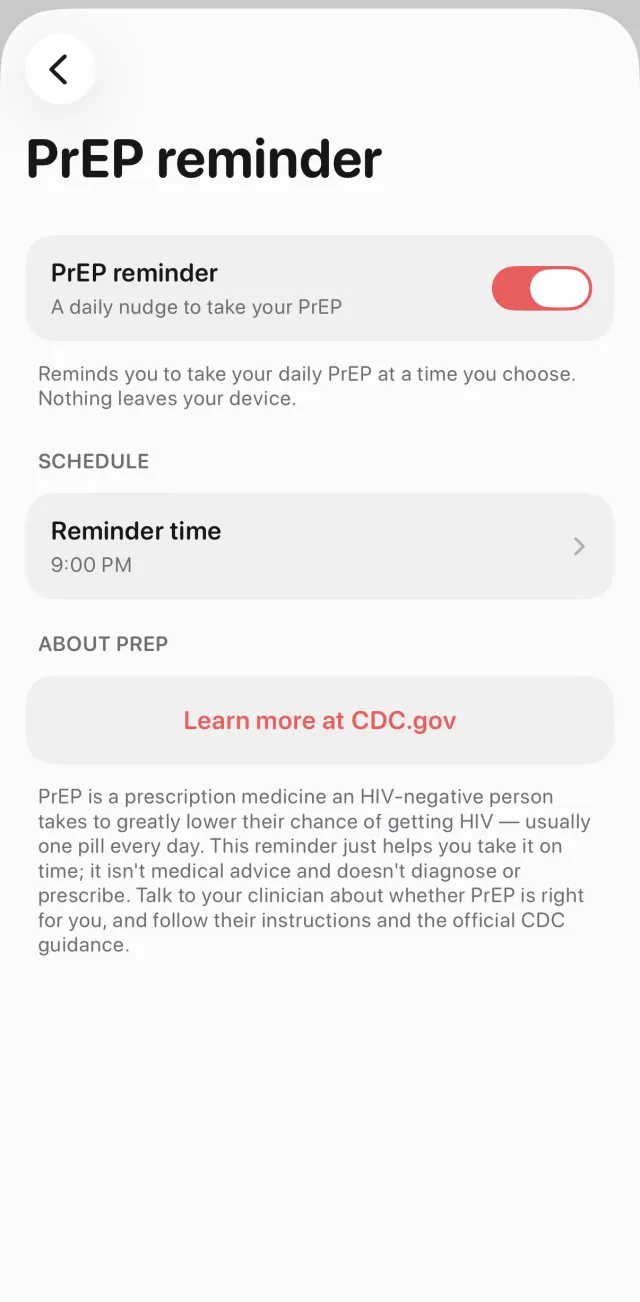
Set the time to match the habit you picked in step 2, so the nudge lands when the pill box is right in front of you.
4. Make it easy to check whether you took it
It's easy to lose track of whether you already took today's pill. HIV.gov suggests two simple fixes:
- A weekly or monthly pill box with a compartment for each day, so you can see at a glance whether today's is gone.
- A daily log or calendar where you mark each day you've taken it.
If you're not sure whether you took a pill, or you realize you missed one, don't guess. Ask your pharmacist or prescriber what to do. And if you keep forgetting, say so at your next visit: CDC's pocket guide says to talk to your health care provider if you have trouble remembering to take PrEP pills as prescribed.
5. Plan for travel before you pack
Trips are where routines fall apart: different time zones, no bathroom counter you're used to, a bag that goes missing. CDC's guide to traveling with medicine recommends:
- Pack enough for the whole trip, plus extra in case of travel delays.
- Keep it in your carry-on, in case your checked luggage is lost or delayed.
- Use the original, labeled containers.
- Bring copies of your prescriptions, including the generic names, and leave a copy at home with someone you trust in case you need an emergency refill.
- Check the rules at your destination. Each country has its own laws about medicines, so check with the embassy of your destination (and any layover countries).
- Ask about storage. Find out how to store your medicine while traveling; CDC notes extreme temperatures can reduce the effectiveness of many medicines.
- Ask your provider about time zones before you cross several of them.
For trips longer than a month, CDC suggests talking to your provider about how to get enough medicine, since some insurance companies only pay for a 30-day supply at a time.
Keep in mind that a phone reminder set to a clock time, like 9:00 PM, goes off at 9:00 PM in whatever time zone your phone is in. That's convenient, but if your prescriber gives you specific advice for the trip, adjust the reminder to match it.
6. Don't run out: refills and follow-up visits
Running out is the other routine-breaker. The CDC says that while you're on PrEP you'll visit your health care provider routinely, as recommended, for follow-up visits, HIV tests, and prescription refills or shots. HIV.gov says people on daily oral PrEP need to see a provider every 3 months for repeat HIV tests, refills and follow-up. Your prescriber will tell you your own schedule.
A few ways to stay ahead:
- Ask your pharmacy about automatic refills, which HIV.gov suggests so your medicine is ready before you run out.
- Book the next visit before you leave the current one, and put it in your calendar with an alert a week or two ahead.
- Count the week, not the day. When your box or bottle gets down to about a week's worth, that's your cue to check the refill is on its way.
- Ask about telehealth. CDC suggests asking your provider about telehealth services for follow-up visits.
PrEP visits include HIV tests, but CDC also notes that PrEP doesn't prevent other STIs. Our guide to how often you should get tested for STIs covers the CDC's testing schedule, and Hook's separate Health reminder can nudge you every 3, 6 or 12 months.
If you get PrEP shots instead
The CDC says PrEP can be pills or shots, and if you're receiving PrEP shots, you'll need to visit your health care provider for your shot. Then the thing to remember is the appointment, not a daily pill: put each one in your calendar as soon as it's booked. CDC's pocket guide says to talk to your provider if you plan to miss a PrEP shot appointment. Hook's PrEP reminder is for daily pills only.
Keep it private
PrEP is nobody's business but yours and your provider's. A discreet reminder, lock screen previews turned off, and a pill box instead of a labeled bottle on the counter go a long way. If you also keep a log of your intimate life or your testing dates, our intimacy tracker privacy checklist walks through locking it down.

Hook: private intimacy journal
Log moments, moods and protection, set discreet STI test, PrEP and DoxyPEP reminders, and keep it all on your iPhone. No account needed. Face ID lock and iCloud Backup with Hook+.

FAQ
Is there a PrEP reminder app?
Yes. Any reminder or alarm app can do the job, and CDC's medication safety tips suggest trying a reminder app. Hook has a free daily PrEP reminder on iPhone with a time you choose and discreet lock-screen wording ("Daily reminder", "Time for your daily dose").
What time of day should I take PrEP?
Pick the time you'll actually keep, tied to something you do every day, like brushing your teeth. Ask your prescriber or pharmacist if your prescription comes with any timing or food instructions.
What if I keep forgetting my PrEP?
Tell your prescriber. CDC's PrEP pocket guide specifically says to talk to your health care provider if you have trouble remembering to take PrEP pills as prescribed. They can help you find a routine or talk through other options. For a missed pill, ask your pharmacist or prescriber rather than guessing.
Does a reminder app replace my provider's instructions?
No. A reminder only helps you remember. Your prescriber and pharmacist decide how you take PrEP and how often you need follow-up visits and HIV tests.